CHLOR ALKALI PLANTS
We help to industrialize regions through the local production of chlorine and other products from chlor alkali plants for water treatment and purification
WELYSIS
Modular Chlor-Alkali Plant
As operators of electrolysis plants, we have the know-how to design, build and operate efficient modular chlor-alkali plants worldwide.
Our value goes beyond delivering the technology. We help industrial companies reduce their dependence on external chemical suppliers by enabling local production, more predictable costs, greater supply security and better control over quality and operating margins.
Our modular approach allows each project to start with the capacity the business needs today and expand as demand grows, avoiding unnecessary oversizing and reducing investment risk.
All Welysis electrolysis plants automatically become part of WIN, the Welysis International Network. Through its five pillars, WIN brings together best practices, training, shared knowledge, quality standards and operational experience to support continuous improvement throughout the plant’s lifecycle.
Leaders in technological and operational innovation
Rapid return on investment
Economic and social benefits
WHAT WELYSIS OFFERS
Welysis designs, builds and installs modular chlor-alkali electrolysis plants that enable companies to produce essential chemicals locally and reduce their dependence on external suppliers.
Each plant is adapted to the customer’s actual production needs. Its modular design makes it possible to start with the required capacity and expand production as demand grows, avoiding unnecessary oversizing and reducing investment risk.
Our solution covers the complete project lifecycle: engineering, construction, installation, commissioning and ongoing technical support. We do not simply supply equipment; we deliver an operational production solution designed to provide secure supply, predictable costs and greater control over quality, availability and operating margins.
Every Welysis plant automatically becomes part of WIN, the Welysis International Network, where best practices, training, knowledge, quality standards and operational experience are shared to support continuous improvement throughout the plant’s lifecycle.
News
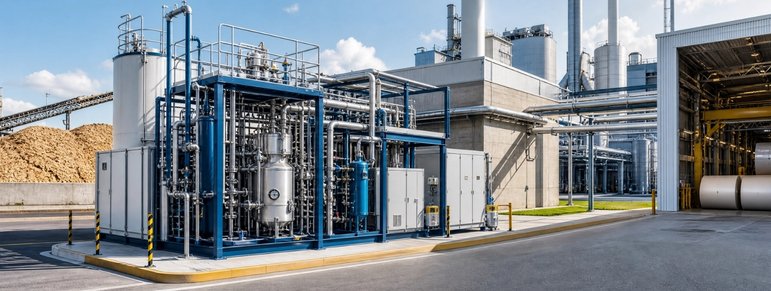
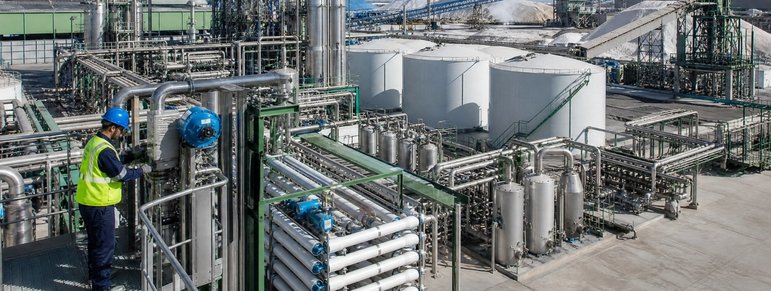
SCALABLE AND MODULAR CHLOR ALKALI PLANTS
We design, build and install three standard modular plant types for different production capacities. Thanks to their modular design, production can be scaled up in line with growth forecasts.
WHY WELYSIS
More than an equipment supplier
Welysis combines proven technology, modular engineering and long-term operational support to turn an electrolysis plant into a reliable and profitable production capability.
01
One partner for the entire project
Welysis integrates design, engineering, construction, installation, commissioning and operational support, reducing the complexity of coordinating multiple suppliers.
02
Modular growth without oversizing
Production capacity can start at the level the business needs today and expand as demand grows, helping reduce initial investment and avoid unnecessary capacity.
03
Operational experience, not only technology
As plant operators, we understand both construction and day-to-day operation. This practical knowledge is applied from the initial design through the full plant lifecycle.
04
Continuous support through WIN
Every plant joins the Welysis International Network, gaining access to shared knowledge, training, best practices, quality standards and ongoing operational experience.
We do not simply deliver a plant and disappear.
We remain involved to support performance, safety, continuity and long-term production efficiency.
THE TRANSFORMATION
From buying critical chemicals to controlling their production
Welysis helps companies replace external supply dependence with a local production capability that provides greater control over cost, quality, availability and future growth.
BEFORE WELYSIS
Chemical supply depends on external decisions
External supplier dependency
The continuity of production depends on third-party availability, logistics and delivery times.
Volatile and unpredictable costs
Chemical prices, transport costs and supply conditions can change without operational control.
Limited control over quality
Product quality and freshness depend on manufacturing, storage and transportation by third parties.
Margin transferred to the supply chain
A significant part of the product’s value remains with manufacturers, distributors and logistics operators.
WITH WELYSIS
Chemical production becomes an operational advantage
Local and secure production
Critical chemicals are produced close to where they are needed, reducing exposure to external supply disruptions.
More predictable production costs
The company gains greater visibility over production costs and reduces its exposure to market volatility.
Control over quality and availability
Production can be adapted to operational requirements, with direct control over output, quality and supply.
More margin and scalable growth
Local production captures more value and modular capacity can expand as demand and business opportunities grow.
THE BUSINESS IMPACT
Greater supply security, more predictable costs and the ability to grow with greater control.
FAQs about Chlor Alkali Plants
At Welysis, we specialize in cutting-edge solutions for chlor alkali plants, helping industries optimize production, enhance efficiency, and ensure sustainability. Our expertise covers advanced electrolysis technologies, process optimization, and compliance with environmental standards.
In this section, you’ll find answers to the most common questions about chlor alkali plants, their processes, applications, and industry best practices. Whether you are looking for insights on energy efficiency, safety, or regulatory compliance, our FAQs provide valuable information to help you stay informed.
Explore the topics below to learn more about chlor alkali plants and how Welysis can support your operations.
A chlor alkali plant primarily produces three essential chemicals:
- Chlorine (Cl₂) – Used in water treatment, PVC production, and chemical synthesis.
- Sodium Hydroxide (NaOH, caustic soda) – A key component in paper, textiles, and soap manufacturing.
- Hydrogen (H₂) – A valuable byproduct used in energy applications and chemical processing.
Welysis designs and delivers modular chlor-alkali plants based on alkaline electrolysis with ion-exchange membrane technology. These plants produce chlorine (Cl₂), caustic soda (NaOH), and hydrogen (H₂) with high purity and optimized energy consumption. They do not use mercury or diaphragm cells, complying with the strictest environmental standards. Thanks to their modular design, they are easily scalable and ideal for industries such as chemicals, water treatment, pulp and paper, and textiles, where these essential compounds are in demand.
Energy consumption depends on the electrolysis technology used. A membrane cell chlor alkali plant requires 2,500 to 3,000 kWh per metric ton of chlorine produced. Optimizing energy sources, including renewables, can reduce operational costs.
The space requirement depends on plant capacity, technology, and infrastructure needs. A modular chlor alkali plant can be designed to fit within a compact footprint, typically ranging from 500 to 5,000 square meters, allowing for flexibility in industrial settings.
A modular chlor alkali plant can be installed and commissioned within 6 to 12 months, depending on site conditions, permitting, and equipment availability. Pre-assembled modular units significantly reduce setup time.
To ensure safety, chlor alkali plants implement:
- Automated leak detection and emergency shutdown systems.
- Personal protective equipment (PPE) for workers handling chlorine and caustic soda.
- Proper ventilation and scrubbing systems to manage gas emissions.
Yes. Modular chlor alkali plants allow for scalable expansion by adding additional electrolysis cells and support systems. Welysis provides customized capacity upgrades based on market demand.
Key strategies include:
- Using energy-efficient membrane technology to lower electricity costs.
- Implementing process automation to reduce labor and downtime.
- Utilizing byproducts (hydrogen) for additional revenue streams.
Chlor alkali plants must comply with local and international environmental regulations, including:
- Air emission permits for chlorine and hydrogen.
- Water discharge permits for brine treatment.
- Hazardous chemical storage and handling approvals.
Membrane cell technology is the preferred method for modern chlor alkali plants because it:
- Eliminates mercury and asbestos, making it environmentally safer.
- Reduces energy consumption, improving efficiency.
- Produces high-purity sodium hydroxide.
Welysis provides comprehensive support, including:
- 24/7 technical assistance and troubleshooting.
- Spare parts supply and equipment upgrades.
- Ongoing process optimization consulting.
Local chlor alkali plants reduce supply chain risks, transportation costs, and import dependencies, ensuring a stable and cost-effective chemical supply.
Quality is maintained through:
- Regular brine purification to remove impurities.
- Strict monitoring of electrolysis conditions.
- Adhering to international chemical quality standards
To increase profitability, consider:
- Optimizing energy efficiency through advanced membrane cells.
- Diversifying product applications to expand market reach.
- Reducing waste and maximizing byproduct utilization.
MORE INFORMATION? CONTACT AN EXPERT
How Chlor‑Alkali Electrolysis Can Transform Your Salt into Key Chemicals
Modernisation and diversification of the industrial sector 2022: “Electrolysis plant factory”

Project co-financed by the European Social Fund – Impulse FP DUAL