
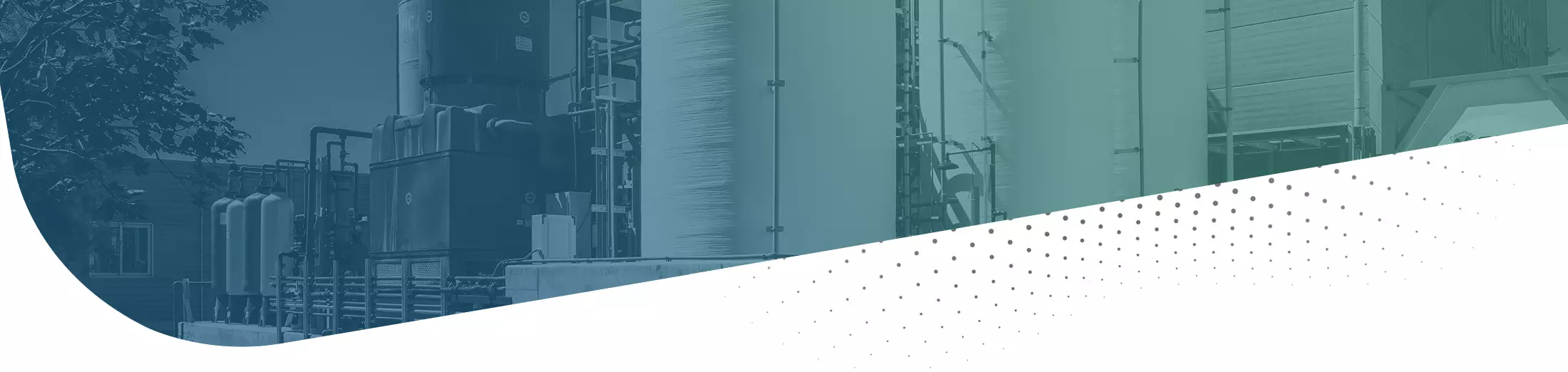
Scalable and modular electrolysis plants
At Welysis, we handle the design, engineering, assembly and installation of electrolysis plants. We also take care of commissioning, training, operation, maintenance and continuous improvement processes.

We have extensive experience in the management of electrolysis plants and the manufacture of the end products. We offer a comprehensive service at every stage of the process, from start-up to training, operation and maintenance. Furthermore, within our WIN network (Welysis International Network), we promote collaboration and the exchange of knowledge between all our members, with the aim of achieving continuous improvement in all our activities.
Design, construction and implementation of alkaline electrolysis plants.
We design, build and implement three standard plant models for different chlorine production capacities. Each model is scalable from 1 (S, S+, M), 2 (M+, L), 3 (M++, L+) or 4 (L++) electrolysers to offer an optimal design adapted to the demand of each market.
SMALL
S+ S++
Production: 2-4 ton Cl2/day
Products: Sodium Hypochlorite 14-17%.
Installation surface: 3000 m2
- Integrated in WIN
(Welysis International Network) - Very short delivery time
- Efficient energy consumption
MEDIUM
m+ m++
Production: 3.3- 9.9 ton Cl2/día
Products:
- Sodium Hypochlorite 14-17%
- Caustic Soda 32-50%
- Hydrochloric Acid 33%
- Hydrogen
Installation surface: 4,500 m2
- Integrated in WIN (Welysis international network)
- Short delivery time
- Highly efficient energy consumption
LARGE
l+ l++
Production: 10-20 ton Cl2/día
Products:
- Sodium Hypochlorite 14-17%
- Caustic Soda 32-50%
- Hydrochloric Acid 33%
- Hydrogen
Installation surface: 5,500 m2
- Integrated in WIN (Welysis international network)
- Short delivery time
- Highly efficient energy consumption
WHAT ARE THE ADVANTAGES OF OUR AWE - Alkaline Water Electrolysis PLANTS?
Approved according to the most demanding international standards.
Continuous, reliable and safe production.
High quality end product guarantees and satisfies local demand.
Transport costs for hazardous products and associated regulatory restrictions are reduced.
Minimum 25 year lifespan of installation ensures an excellent return on investment.

FINANCING
AVAILABLE

SCALABLE AND MODULAR ELECTROLYSIS PLANTS
We design, build and install three standard plant types for different production capacities. Thanks to their modular design, production can be scaled up in line with growth forecasts.
Made in Europe
EXCLUSIVE AND INNOVATIVE TECHNOLOGY.
We are leaders in the development of proprietary technologies and in adopting the latest trends in the water treatment market. Our dedicated R&D team works constantly to keep us at the forefront of technological innovation and ensure the highest standards in our products and solutions.
FAQ ABOUT ELECTROLYSIS PLANTS
At Welysis, we design, manufacture, and install modular electrolysis plants that empower businesses to produce essential chemicals such as sodium hypochlorite, caustic soda, hydrochloric acid, and hydrogen—directly on-site. Whether you’re a salt producer looking to diversify, a chemical distributor seeking more control, or an industrial player aiming to reduce costs and emissions, our scalable and energy-efficient systems offer a tailored solution. Below, you’ll find answers to the most common questions from companies exploring how electrolysis technology can transform their operations.
Advantages of Welysis Solutions
Local production: Reduces the costs and risks associated with transporting hazardous chemicals.
Scalability: Modular plants allow production capacity to be increased according to demand.
Energy efficiency: Designed for optimal energy consumption.
Regulatory compliance: Approved according to the most stringent international standards.
WIN Network: Integration into the Welysis International Network to share best practices and knowledge.
What type of electrolysis plants for hydrogen does Welysis offer?
Welysis provides alkaline water electrolysis (AWE) plants for green hydrogen production. This technology is ideal for industrial applications that require sustainable and efficient hydrogen generation. Unlike PEM technology, Welysis’s alkaline plants offer lower operational costs, longer electrode lifespan, and easy integration with renewable energy sources. They are a reliable solution for the chemical industry, energy storage, and processes demanding clean hydrogen.
What is the difference between modular and conventional electrolysis plants?
Modular electrolysis plants, like those developed by Welysis, are designed for scalability, flexibility, and rapid deployment. Unlike conventional systems that require complex engineering for every new installation, modular plants can be assembled from standardized units, reducing installation time and allowing easy capacity upgrades. This makes them ideal for evolving production demands and decentralized applications.
How does an electrolysis plant's production capacity scale with market demand?
Welysis plants are built with a modular approach, enabling clients to start with a base capacity and scale up by adding modules as demand grows. This minimizes upfront investment and allows the plant to evolve alongside business needs, avoiding overdimensioning or future downtime.
What are the key factors in selecting the right electrolysis plant for my business?
Important factors include: desired production capacity, input resource availability (e.g., salt or water), energy efficiency, expansion potential, and product quality requirements. Welysis offers end-to-end guidance—design, engineering, installation, and lifecycle support—to help you choose and implement the most suitable configuration.
How do modular electrolysis plants adapt to different production requirements?
Modular plants can be configured and scaled according to specific product demands—whether it’s hydrogen, sodium hypochlorite, or caustic soda. Welysis systems allow for quick adaptation by adding or removing modules without major structural changes.
What products can be produced with a Welysis electrolysis plant?
Welysis electrolysis plants are primarily used for the production of essential chemicals such as sodium hypochlorite, caustic soda (NaOH), hydrochloric acid (HCl), and hydrogen (H₂). Thanks to our modular design and advanced membrane technology, these plants offer high efficiency and product purity.
Can I scale up my electrolysis plant in the future?
Yes. Welysis plants are modular and scalable, allowing clients to start small and expand capacity as demand increases. This flexibility is ideal for businesses seeking controlled growth or adapting to new market opportunities.
I’m a salt producer. How can I benefit from installing an electrolysis plant?
Salt producers can diversify their business by converting surplus salt into high-value chemical products like chlorine and caustic soda. This not only increases profitability but also enhances market resilience and supply chain control.
What are the advantages of our plants?
The advantages of our plants include:
- International Homologation: They comply with the most demanding standards, guaranteeing safe and reliable operation.
- Continuous Production: Designed for uninterrupted operation, ensuring a constant supply of chemicals.
- High Final Product Quality: Our processes guarantee high-purity products, which is crucial to meet local market demand.
- Reduced Costs and Constraints: By producing locally, transportation costs are significantly reduced and complex regulations associated with the transportation of hazardous products are avoided.
- Excellent Return on Investment: Our plants are designed to have a minimum useful life of 25 years, offering a solid and lasting return on investment.
Do we offer financing for plant implementation?
Yes, at Welysis we understand the importance of financing for implementing industrial projects. We offer integral support in elaborating a Business Plan, specifically designed to be presented to national and international financial institutions.
We have extensive experience collaborating with public and private financial institutions at an international level, which allows us to ensure the economic viability of our projects. This service includes advice on the best practices to obtain financing and ensure that your project is financially sound and attractive to investors.
Where are the plants manufactured?
Our plants are “Made in Europe”. This means that they follow the highest international standards regarding safety, efficiency, and environmental commitment.
In addition, we deeply respect our workers, guaranteeing fair and safe working conditions. This approach not only ensures the superior quality of our plants but also has a positive impact on the community and the environment.
What makes Welysis different from other electrolysis plant providers?
Welysis offers a complete solution: engineering, design, manufacturing, installation, commissioning, and preventive and predictive maintenance. We also connect all our clients via the Welysis International Network (WIN) to share data, best practices, and performance benchmarks in real time, ensuring continuous improvement.
How can I get more information about our plants?
If you would like to obtain more information about our electrolysis plants, we invite you to contact us through our website.
Our team of experts will be pleased to explore with you the possibilities of collaboration and provide you with all the information you need. In addition, we offer tours of our facilities and demonstrations so that you can see first-hand the quality and efficiency of our solutions.
Can I use renewable energy to power a Welysis electrolysis plant?
Absolutely. Our small modular electrolyzers are optimized for integration with renewable energy sources like solar and wind, enabling sustainable hydrogen and chlorine production with reduced carbon footprint.
How long does it take to install and start up a Welysis plant?
Thanks to our modular design, installation and commissioning are much faster than traditional systems. Depending on the project size, most Welysis plants can be fully operational within a few months.
What support do I get after installation?
Welysis provides continuous technical support, as well as preventive and predictive maintenance services. Through our WIN platform, you also gain access to operational insights and peer support from our international network of plants.
Can an electrolysis plant reduce my operating costs?
Yes. Producing chemicals like caustic soda and chlorine on-site eliminates transportation costs, ensures consistent supply, and can significantly lower acquisition costs over time—especially if you currently import these products.
I’m a chemical distributor. Is it worth becoming a producer?
Definitely. By owning an electrolysis plant, you reduce dependency on volatile international markets, gain better margins, and strengthen your negotiating position with national water companies and other clients.
How does Welysis contribute to sustainability goals?
We align our solutions with the UN Sustainable Development Goals. Our systems promote local production, reduce transport-related emissions, integrate with renewables, and support water treatment and reuse—making your operation more environmentally responsible.
I'm an investor looking for sustainable opportunities. Why should I consider Welysis?
Electrolysis plants offer strong ROI through product sales and cost savings, especially when tied to green energy and local production. Welysis offers a proven, modular, and scalable system backed by ongoing support and a global data network to optimize performance.
What factors influence the price of an electrolysis plant?
The factors that influence the price of an electrolysis plant are multiple.
Production capacity: Plant size is the most determining factor. Plants are typically measured in MW of installed power or in kg/h or Nm³/h of hydrogen produced. Significant economies of scale exist – larger plants have lower specific costs (€/kW or €/kg H₂ daily).
Electrolysis stack: Represents 20-40% of total cost, depending on technology and manufacturer.
Balance of Plant (BoP):
- Rectifiers and power systems (15-25% of cost)
- Water purification systems
- Cooling systems
- Control and automation systems
- Gas systems (drying, purification, temporary storage)
Electrical infrastructure: Transformers, switchgear, grid connection, backup systems.
Project location:
- Local labor costs
- Safety regulations and standards
- Access to existing infrastructure
- Climate conditions affecting design
Government incentives: Subsidies, tax credits, or preferential financing can reduce net cost.
Installation complexity: Complex terrain, integration with existing processes, or special safety requirements increase costs.
Services included: EPC (Engineering, Procurement, Construction), commissioning, training, extended warranties.
WANT + INFORMATION?
Contact us to explore possibilities for collaboration.

